


Summer at the DLC is to DYE For!
/As the sun rises on another summer, we here at the DLC have so much to look forward to. Our weeks of summer camps kick off this month, and we are so excited to have kids back on campus! Playing more rounds of Where the Summer Wind Blows, performing more weather skits, putting on more layers of sunscreen and bug spray, singing more songs around the campfire, digging more holes at the beach, but perhaps my favorite is creating more amazing tie-dye shirts!
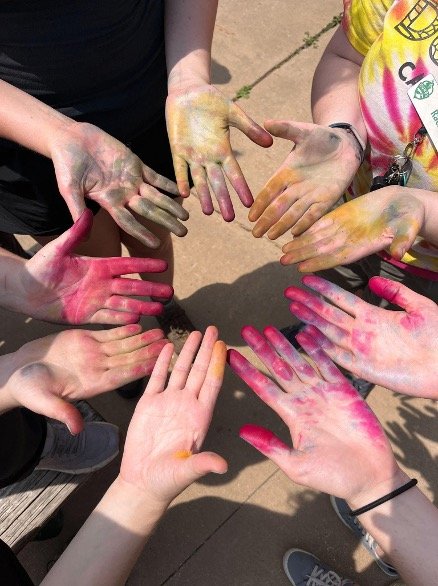
THE COLORFUL AFTERMATH OF TIE-DYING
Believe it or not, tie-dye has existed in some form or another for thousands and thousands of years! Originating in South Asia, bandhani is one of the oldest techniques for tying and dying clothing. For more than 5,000 years, bandhani clothing has been produced by tying several very small knots in fabric and then dropping it into a vat of natural dye. Shibori is another technique using natural indigo dyes. This form originated in Japan around 1,300 years ago and has 6 traditional sub-techniques. Not only was fabric tied and dyed, but it was also folded, stitched, and clamped for a variety of intricate designs. Flashing forward to the 1910s, the debut of RIT dye in America made dyeing clothes at home much easier, more accessible, and set the scene for the 1920s and 30s when tie-dye would become a chic and thrifty hobby that could be done from the comfort of one’s home. A few decades later would see the tie-dye boom of the 60s and 70s, and now it’s a popular article of clothing for summer camps across the nation!
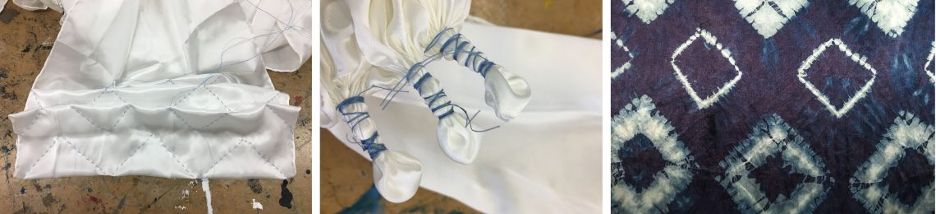
AN EXAMPLE OF THE SHIBORI PROCESS AND FINAL RESULT
My own experience with tie-dye dates back to my days as a girl scout in elementary school. I still have the very first tie-dye shirt I ever made at a girl scout camp! I remember being told we could only pick two colors per person, and while some girls agonized over which two to pick, it was an obvious pink and blue combo for me. Despite picking the colors and the pattern, I had no idea what the final product would look like, and I could hardly contain my excitement! It’s like Christmas in July when you first rinse, unwrap, and wash your tie-dye! Since then, I’ve tie-dyed shirts, bucket hats, tote bags, and I think at one point I even tried to paint a tie-dye design on my nails with nail polish. The excitement never wears off, no matter how many times I tie-dye!
Tie-dye goes beyond the surprise that comes with seeing the final product. First, it’s a way to express yourself artistically! Some people pick their favorite colors (like I did with my pink and blue masterpiece way back when), and others pick color combinations they think look good together. Regardless, the colors in a tie-dye say something about the creator. Second, it’s a great way to make memories! Aside from remembering the creation process, you also get a physical memento to take home with you. With each of my tie-dye pieces, I’m reminded of the time and place where I made them. Finally, tie-dye can be a great community builder! Some kids that come here are experienced campers and know a thing or two about tie-dying, and it’s really sweet watching them help the first-timers make their shirts on the first day. The last day of summer camp is affectionately deemed “Tie-Dye Friday” because all the kids get their t-shirts back and wear them for our camp’s graduation ceremony. It’s so amazing to see a giant circle of 70 kids all wearing their unique creations, but it’s even more amazing to see each of them go from person to person and sign each others’ shirts! I can’t think of a better way to commemorate the summer.
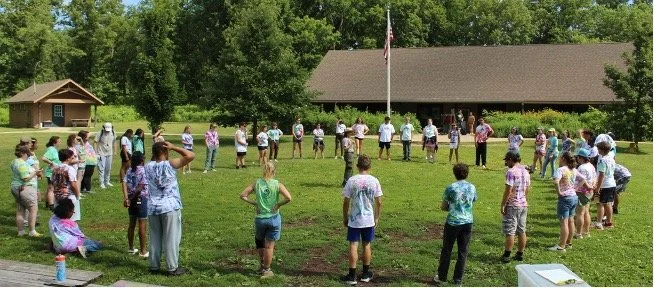
GRADUATION CEREMONY, SUMMER 2025

STAFF AND CAMPERS SIGNING SHIRTS ON THE LAST DAY OF CAMP
If you’d like to make a groovy tie-dye of your own this summer, there’s a link below with instructions and patterns. Not everyone is a museum-worthy artist, but I assure you that everyone can make a tie-dye!
Tie Dye Tips and Techniques:

Emily Burnett, First Year Environmental Educator
Sources:
Fit to Be Dyed, 2021
https://www.sciencehistory.org/stories/magazine/fit-to-be-dyed/
The Ancient Japanese Art of Shibori, 2019


